
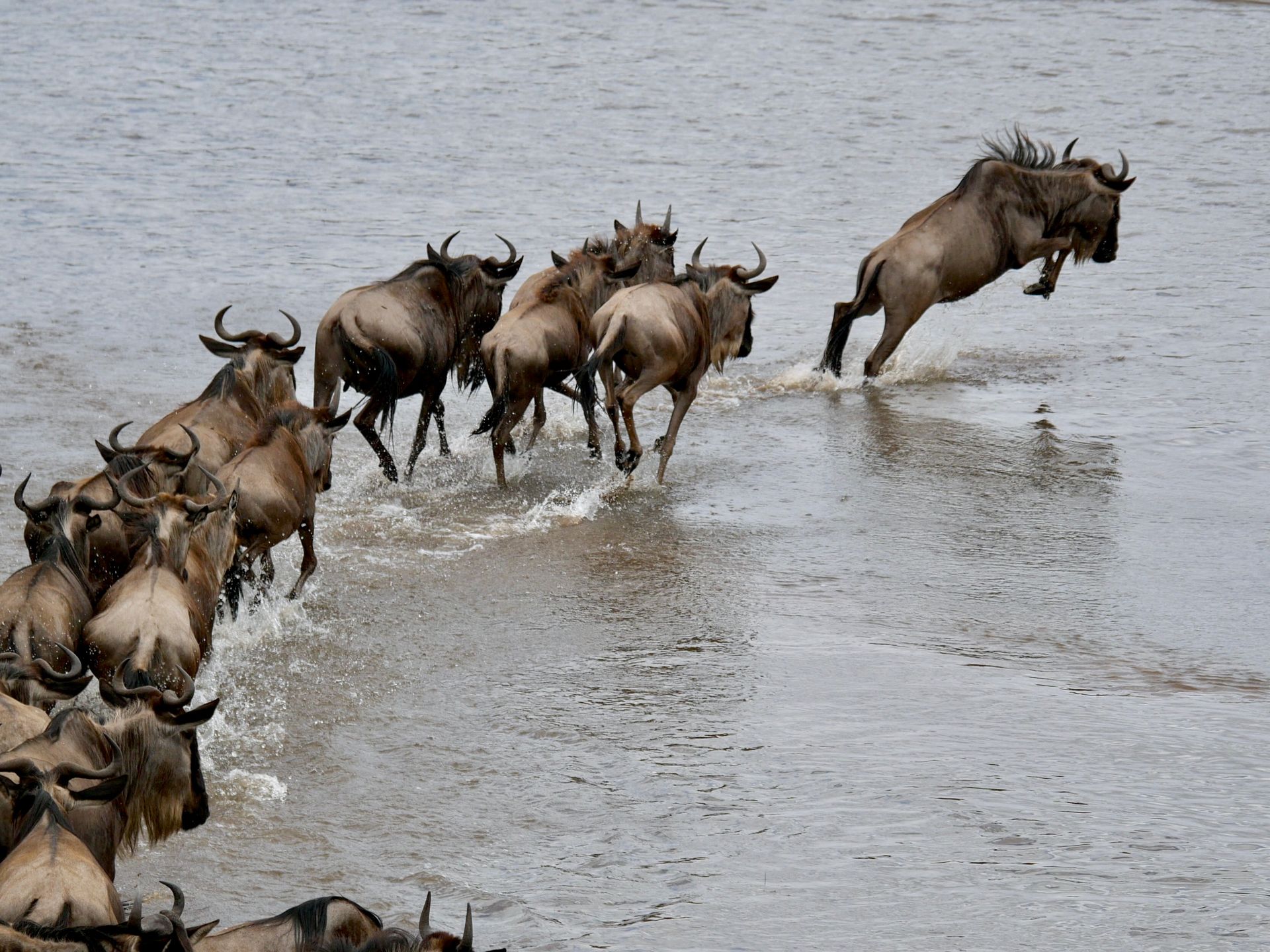
The Great Migration is the largest movement of land animals on earth. Every year, over 1.5 million wildebeest — plus hundreds of thousands of zebra and gazelle — move in a continuous loop between Kenya's Maasai Mara and Tanzania's Serengeti. They follow the rains and the fresh grass, and they do it year after year.
The problem is, most guides just say "go between July and October." That's not wrong, but it's not the full picture either. This guide breaks down exactly where the herds are each month so you can time your trip properly.
For Mara River crossings in Kenya, visit between July and October — peak action is August and September. For calving season and predator activity in Tanzania, visit January to March. Both are worth it — they're just different experiences.
January – March: Calving Season in the Southern Serengeti
Around 500,000 wildebeest calves are born in just a few weeks. Predators — lion, cheetah, hyena — are never far. Excellent game viewing with fewer tourists.
The herds start moving north as the short rains end. The Serengeti is still green and lush. A good month to visit before the long rains begin.
Calving season doesn't get talked about enough. Yes, the Mara River crossings are dramatic — but watching a lion take down a wildebeest calf while its mother tries to defend it is something equally raw and unforgettable. January and February in the southern Serengeti are some of the best weeks in the entire migration calendar for predator sightings.
April – June: The Long Rains and the Move North
The rainy season. Roads can be difficult and some camps close. Wildlife is dispersed across the plains. Lowest prices of the year — good for budget travellers who don't mind the conditions.
The rains ease and the herds push north through the Western Corridor. The Grumeti River crossings happen in June — smaller than the Mara, but dramatic and far less crowded.
April and May are the quietest months for tourism — and for good reason. The roads can be muddy, the grass is long and it's harder to spot wildlife. That said, the landscape is stunning and the prices are the lowest of the year. June is underrated — the Grumeti crossings are real, the crowds are manageable and the Serengeti is at its most beautiful as the rains clear.
July – October: The Mara River Crossings
The wildebeest begin crossing the Mara River into Kenya. Crossings can happen multiple times a day. This is the most famous spectacle in African wildlife — and for good reason.
Peak crossing activity. The Mara is full of wildebeest. September is generally considered the single best month for river crossings. Big cats are very active too.
July to October is why people come to the Maasai Mara. The wildebeest arrive in their hundreds of thousands, and the Mara River is the obstacle between them and the fresh grass on the other side. Crocodiles wait in the water. Lions watch from the banks. When a crossing happens, it can last minutes or hours — it's completely unpredictable, which is part of what makes it so gripping.
One thing to know: crossings are not guaranteed on any given day. The wildebeest can gather at the river, smell a crocodile, and turn back — sometimes for days. A good guide knows the best crossing points and will position you early. We've seen clients wait two days and then witness five crossings in one morning. Patience pays off.
The most common mistake we see is people booking just one or two nights in the Mara during migration season. You need at least three nights to give yourself a real chance of witnessing a crossing. Book four if you can.
November – December: The Return South
Short rains arrive and the wildebeest begin moving south through the northern Serengeti. The Mara is quieter now. Some of the best value for money in Maasai Mara.
The herds are spread across the Serengeti heading south. Good game viewing, fewer crowds, excellent prices. Calving will begin again in January.
Tips for Booking Around the Migration
- Book early for July to October. The best camps in the Mara sell out months in advance. If you want to be there in August or September, start planning at least six months ahead.
- Stay at least three nights. Crossings don't happen on command. The longer you stay, the better your chances of seeing one.
- Consider a combined Kenya-Tanzania safari. If you have 10 days or more, you can combine the Maasai Mara and Serengeti in one trip — and follow the migration across the border.
- Don't discount the off-peak months. Calving season (January to March) offers spectacular wildlife viewing with fewer tourists and lower prices. Many experienced safari-goers prefer it.
- Choose a camp on the river. Lodges and camps situated on or near the Mara River give you faster access to crossing points and more time watching instead of driving.
Frequently Asked Questions
When is the best time to see the Great Migration in Kenya?
July to October, with August and September being peak months for Mara River crossings in the Maasai Mara.
Is the Great Migration only in Kenya?
No — the migration is a year-round cycle between Kenya and Tanzania. The Mara River crossings happen in Kenya, but the rest of the year the herds are in Tanzania's Serengeti, Ngorongoro and surrounding areas.
Can I see the migration in the Serengeti?
Yes. The Serengeti has migration action for most of the year — calving in the south (January to March), the Grumeti crossings in the Western Corridor (June), and the herds moving through the northern Serengeti (October to November).
How long should I stay in the Maasai Mara?
A minimum of three nights during migration season. Four is better. The crossings can happen at any time and are not predictable — the more time you have, the better your chances.