
Safari Overview
This 10 days Maasai Mara, Serengeti, Ngorongoro and Lake Manyara road safari is one of the most complete East Africa itineraries you can do. You start in Kenya, cross into Tanzania at the Isebania border, and work your way south through four of the most famous wildlife destinations on the continent — all by road in a private 4×4 Land Cruiser. By the time you fly home from Arusha, you will have seen more of East Africa than most people manage in two separate trips.
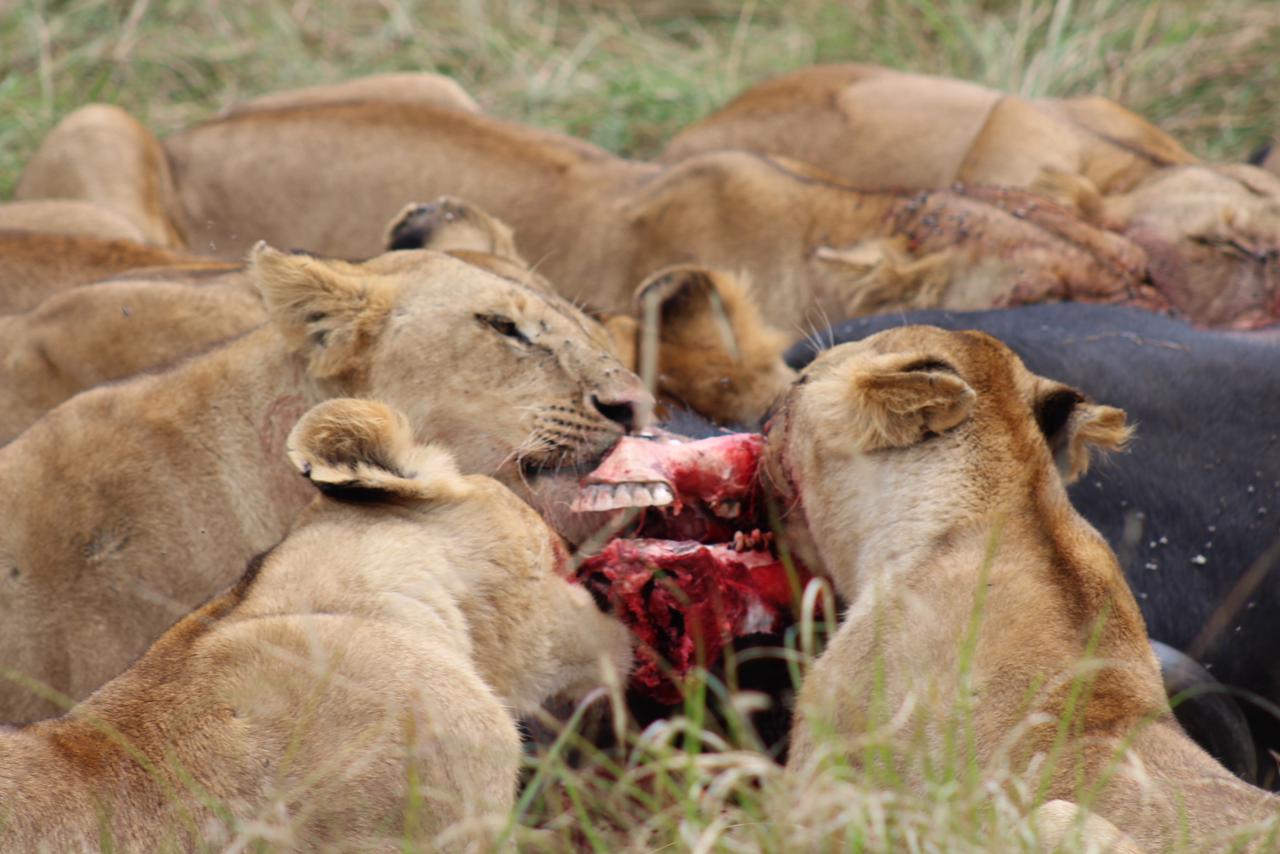
You spend two nights in the Maasai Mara, which gives you a full day for game drives in Kenya's most celebrated reserve. Lion, leopard and cheetah sightings are common here, and the open grasslands make it some of the best predator-watching in Africa. If you travel between July and October, this is also where the Great Migration plays out on the Kenyan side.
Three nights in the Serengeti is enough time to properly explore this enormous park. The Serengeti is bigger than you expect and the central zone — the Seronera area — is where the wildlife is most reliable year-round. You have two full days of game drives here, which is rare on shorter itineraries and makes a real difference to what you see.
Two nights on the Ngorongoro Crater rim means you descend into the crater on a full day game drive with no rush to get back. The crater is a world unto itself — a collapsed volcano that traps wildlife inside its walls year-round. Black rhino, lion, elephant and hundreds of flamingos on the soda lake floor. It is genuinely unlike anything else in Africa.
You finish with one night at Lake Manyara National Park before driving to Arusha for your departure. Manyara is often overlooked because it sits between Ngorongoro and Arusha, but it is a beautiful park — a narrow strip of woodland and acacia forest running along a rift valley escarpment, with a shallow alkaline lake that turns pink with flamingos. The tree-climbing lions here are famous and completely unlike anything you see elsewhere.
Best Time to Visit
June to October is peak season across all four parks. The Great Migration is in the Mara and northern Serengeti from July onwards, and this is when wildebeest river crossings are most likely. Wildlife is concentrated and the dry conditions make game viewing excellent throughout.
January to March is another strong window. The Serengeti's southern plains are full of wildebeest calving from January to February, which draws huge numbers of predators. Fewer tourists, lower prices and still excellent game viewing across the board.
April to May is the long rainy season. Some roads get muddy and the landscape is very green, but the parks are much quieter and prices drop significantly. Wildlife is still there — just harder to spot in the long grass.
Animals You Can Expect to See
Maasai Mara
- ✓ Lion
- ✓ Leopard
- ✓ Cheetah
- ✓ Elephant
- ✓ Buffalo
- ✓ Hippo
- ✓ Wildebeest & Zebra
Serengeti
- ✓ Wildebeest (millions)
- ✓ Lion
- ✓ Leopard
- ✓ Cheetah
- ✓ Elephant
- ✓ Giraffe
- ✓ Wild Dog (seasonal)
Ngorongoro Crater
- ✓ Black Rhino
- ✓ Lion
- ✓ Elephant
- ✓ Buffalo
- ✓ Hippo
- ✓ Flamingo
- ✓ Hyena & Jackal
Lake Manyara
- ✓ Tree-Climbing Lions
- ✓ Elephant herds
- ✓ Flamingo
- ✓ Hippo
- ✓ Buffalo
- ✓ 400+ bird species
- ✓ Baboon & Vervet Monkey
Day-by-Day Itinerary
Arrival in Nairobi
Your driver meets you at Jomo Kenyatta International Airport and transfers you to your hotel in Nairobi. Today is purely for arriving, settling in and resting after your flight. Your guide will come by in the evening to run through the full 10-day plan, answer any questions and get everything organised for an early departure tomorrow morning.
If you land early enough in the day, the David Sheldrick Elephant Orphanage and the Giraffe Centre are both easy to fit in — both are within Nairobi and worth a visit. These are optional and charged separately.
Nairobi to Maasai Mara National Reserve
Up early and on the road by 7am. You drive southwest out of Nairobi, drop down through the Great Rift Valley escarpment and continue through Narok town before reaching the Maasai Mara. The drive is around 5 to 6 hours and the scenery along the way is genuinely good — it doesn't feel like dead time. You arrive at your lodge for lunch.
After lunch and a short break, your guide takes you out for your first afternoon game drive in the Mara. The grasslands here are enormous and the wildlife density is very high — don't be surprised if you see lion or cheetah within the first hour. The light in the late afternoon is also excellent for photography.
Full Day Game Drive — Maasai Mara
A full day inside the Mara with morning and afternoon drives. You head out at first light — predators are most active early and the chances of seeing a hunt are highest around dawn. Your guide will have intelligence from the previous day on where the lion prides and cheetah are operating.
In the afternoon, head down to the Mara River. Between July and October this stretch of water is where the wildebeest cross as part of the Great Migration and it is one of the most dramatic wildlife spectacles you can witness. Even outside migration season the river has permanent hippo pods and crocodiles, and the birding along the banks is excellent. You end the day with a sundowner before heading back to the lodge.
Maasai Mara to Serengeti via Isebania Border
After a final short morning drive (optional) and breakfast, you check out and head south towards Tanzania. You cross the border at Isebania on the Kenyan side and Sirari on the Tanzanian side — your guide handles all the paperwork and formalities. The crossing is straightforward and usually takes around an hour.
Once inside Tanzania you enter the Serengeti through the Bolgonja Gate in the north and start game driving immediately. The northern Serengeti is remote and the landscape is beautiful — endless plains with the odd acacia tree, rocky kopjes rising out of the grass and wildlife at every turn. You reach your lodge in the Seronera area in the late afternoon, just in time for your first Serengeti sundowner.
Full Day Game Drive — Central Serengeti
A full day in the central Serengeti. The Seronera area is the heart of the park and has the most reliable wildlife year-round. The Seronera River valley is particularly good for leopard — there is a healthy resident population here and your guide will know the trees they like to rest in. Lion prides are common throughout and cheetah are regularly spotted on the open plains.
The kopjes — outcrops of ancient granite rock scattered across the plains — are worth spending time at. They are sunbathing spots for lion and leopard and the rocks themselves are fascinating, covered in lichen and often surrounded by hyrax. In the afternoon you cover the southern areas of the central zone before returning to your lodge for dinner.
Full Day Game Drive — Serengeti
Your second full day in the Serengeti and you can use it to explore a different part of the park. Depending on the time of year and where the migration is, your guide may take you west towards the Grumeti River — a second crossing point for the wildebeest with some enormous resident crocodiles — or north towards the Lobo area where the plains are more open and vast.
If a hot air balloon safari is on your list, this is the morning to do it. You launch at dawn over the Serengeti plains and watch the landscape come to life from above — it is expensive but unforgettable. It is charged separately and needs to be booked in advance, so let us know when enquiring. The rest of the day continues with a normal game drive before heading back to camp.
Serengeti to Ngorongoro Crater Rim
After breakfast you drive east out of the Serengeti through the Naabi Hill Gate and head towards the Ngorongoro Conservation Area. The drive takes around 2 to 3 hours and the landscape changes dramatically as you climb up towards the crater rim — the air gets cooler, the vegetation gets denser and the views become spectacular.
On the way, you can stop at Olduvai Gorge — one of the most important archaeological sites in the world, where Louis and Mary Leakey discovered some of the earliest evidence of human ancestors. The site museum is small but genuinely interesting and the gorge itself is impressive. In the afternoon you check in to your lodge on the crater rim with views down into the caldera that are hard to put into words.
Full Day Crater Drive — Ngorongoro
An early start to descend into the crater before other vehicles. You drop 600 metres down the crater wall on a winding dirt track and emerge onto the floor — a flat, open caldera about 20 kilometres wide with roughly 30,000 animals living inside it. The sense of scale and the density of wildlife is extraordinary, especially first thing in the morning.
You spend the full day down here. The southern part of the crater has the soda lake, Lake Magadi, where flamingos gather in their thousands and hippos wallow at the lake's edge. The lion prides in the crater are large and well-known — some of the most studied lions in Africa. Black rhino sightings are not guaranteed but the crater has one of the highest densities of black rhino in Tanzania and your guide knows where to look. You have a picnic lunch on the crater floor before continuing the afternoon drive and climbing back out at dusk.
Ngorongoro to Lake Manyara National Park
After breakfast and check-out, you drive east and then north to Lake Manyara National Park — about 90 minutes from the crater. You enter the park and spend the afternoon on a game drive through what is one of Tanzania's most underrated parks. It doesn't have the scale of the Serengeti or the drama of Ngorongoro, but it has a beauty and intimacy that a lot of people find very special.
The park is a narrow strip of woodland and forest running between the rift valley wall and the alkaline lake. Elephant herds wander through the fever tree forest and large troops of baboon are everywhere. The tree-climbing lions that Manyara is famous for are a real wildlife oddity — lions that regularly climb into acacia trees and lounge on the branches, something they don't do anywhere else. Flamingos gather on the lake shore in big numbers when water levels are right, and the birdlife here is exceptional — over 400 species recorded.
Lake Manyara to Arusha — Departure
A final morning game drive inside Lake Manyara (optional) before breakfast and check-out. You then drive to Arusha, which is about 1.5 hours from the park. Your driver drops you at Kilimanjaro International Airport (JRO) in time for your afternoon or evening flight home. If you are flying via Nairobi, a quick transfer can be arranged.
If your flight is the following day, we can arrange an extra night in Arusha. The town has a good food scene and there are some worthwhile cultural stops nearby — the Arusha National Park, the Cultural Heritage centre and some excellent coffee shops. Just let us know when you enquire.
What's Included & Excluded
Included
- JKIA airport pickup and JRO final drop-off
- 1 night hotel in Nairobi (bed & breakfast)
- 8 nights mid-range lodge accommodation
- All meals — full board in all parks
- All game drives in private 4×4 Land Cruiser
- Kenya & Tanzania park and conservation fees
- Ngorongoro crater descend fees
- Border crossing assistance (Isebania/Sirari)
- Certified expert safari guide
- Bottled water throughout
- 24/7 support from Wild Safaris & Travel
Not Included
- International flights
- Kenya eTA and Tanzania e-visa fees
- Travel & medical insurance
- Optional balloon safari in the Serengeti
- Olduvai Gorge museum entry fee
- Optional Nairobi activities
- Alcoholic & premium beverages
- Gratuities for guide & lodge staff
- Optional extra night in Arusha
- Personal expenses
Frequently Asked Questions
The best times are June to October and January to March. June to October is peak season when the Great Migration is active across both the Mara and the Serengeti. January to March has the calving season in the southern Serengeti which is spectacular for predator action, plus fewer crowds and lower prices across all four parks.
Yes. You cross from Kenya into Tanzania at the Isebania-Sirari border crossing on Day 4. Your guide handles all the paperwork at the border. The crossing typically takes around an hour. You will need a valid Tanzania visa or e-visa arranged before travel — we guide you through this after booking.
Across all four parks you have a very realistic chance of seeing lion, leopard, cheetah, elephant, buffalo and hippo. Ngorongoro is one of the best places in Africa for black rhino. Manyara is famous for its tree-climbing lions and flamingos. The Serengeti has the largest concentration of wildlife on earth during the migration months. This is a genuine Big Five route.
Yes, this is a great first safari. It covers more ground than most itineraries but the pace is comfortable — you are never rushing and there is always time to linger at a sighting. The road transfers between parks are manageable and the scenery en route is part of the experience. By the end of 10 days you will have a proper sense of East Africa rather than just a single park.
Ngorongoro is a collapsed volcanic caldera — one of the largest intact calderas in the world. The walls create a natural enclosure that keeps wildlife inside year-round, so the animal density is extraordinary. You can see lion, elephant, buffalo, hippo, wildebeest, zebra, black rhino and flamingo all in a single day drive. There is genuinely nothing else like it in Africa.
This is a mid-range safari using comfortable lodges throughout in both Kenya and Tanzania. All lodges are inside or right on the edge of the parks and include en-suite rooms, a restaurant, swimming pool and Wi-Fi. All meals are full board in the parks — breakfast, lunch and dinner included every day.
Most nationalities need a Kenya eTA applied online at etakenya.go.ke and a separate Tanzania e-visa applied at immigration.go.tz. There is also an East Africa Tourist Visa that covers both countries for some passport holders — we will advise you on the best option for your nationality and guide you through the process after booking.